
May 18th, 2020: Skin Cancer Awareness Month & Don’t Fry Day (May 22nd)

While skin cancer is rare in children, 1 in 5 Americans will develop skin cancer in their lifetime. Experiencing just one bad sunburn as a child or teen, or five sunburns by any age, doubles your risk of getting melanoma, a type of skin cancer. Families may be feeling cooped up after a long winter and rainy spring, especially while social distancing and staying at home. However, it’s important to resist the urge to spend all day in the sun without protection. Follow these sun safety steps to enjoy the warmer weather safely:
Stay in the shade whenever possible and avoid midday sun. UV rays are especially strong between 10 AM and 4 PM.
Cover up with a wide-brimmed hat and a long-sleeved shirt and long pants.
Wear UV-blocking sunglasses. Look for a tag that says the lenses block 99% or more UV radiation.
Use sunscreen every day. Use a broad-spectrum (UVA/UVB) sunscreen with an SPF of 30 or higher. Be sure to reapply every 2 hours or after swimming or sweating.
For infants under the age of 6 months, the AAP states, “Use sunscreen on small areas of the body, such as the face, if protective clothing and shade are not available.”
The Fourth Annual National Sun Safety Day, Don’t Fry Day, promotes education and awareness about sun safety before many families spend time outdoors over Memorial Day weekend and begin the season of summer outdoor activities.
Dr. Sarah Denny Gives Parents the AAP’s Tips on Protecting Children from Sunburn (Video)
COVID-19 Quick Tip
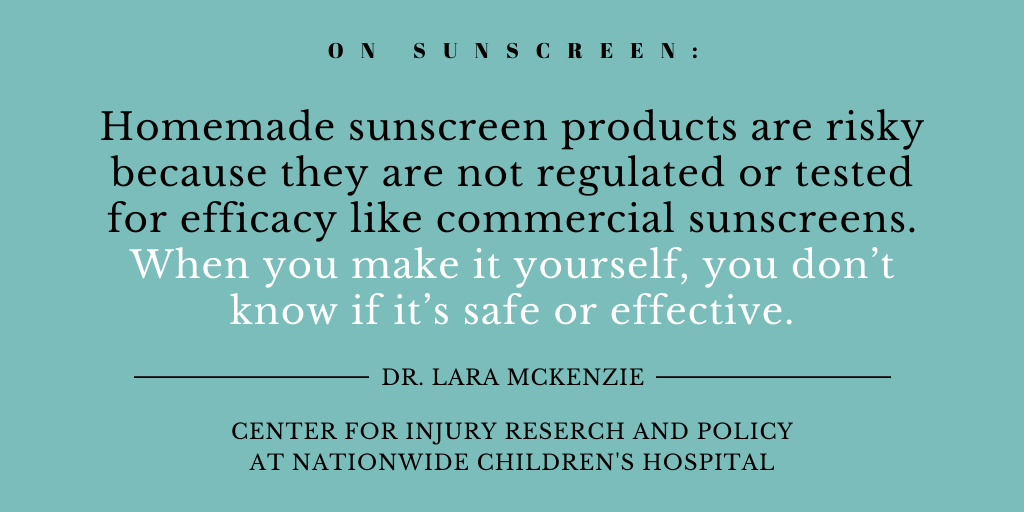
To avoid heading to the store, some parents may be tempted to make “homemade” sunscreen to protect their child’s skin from harmful rays. It’s important to resist the urge to get creative — with homemade sunscreen, you can’t be sure that it is safe or effective. Homemade products are not regulated or tested like the products you can buy at the store.
Homemade Sunscreen Recipes Promise Protection, But May Put Kids At Risk for Burns
Action of the Week
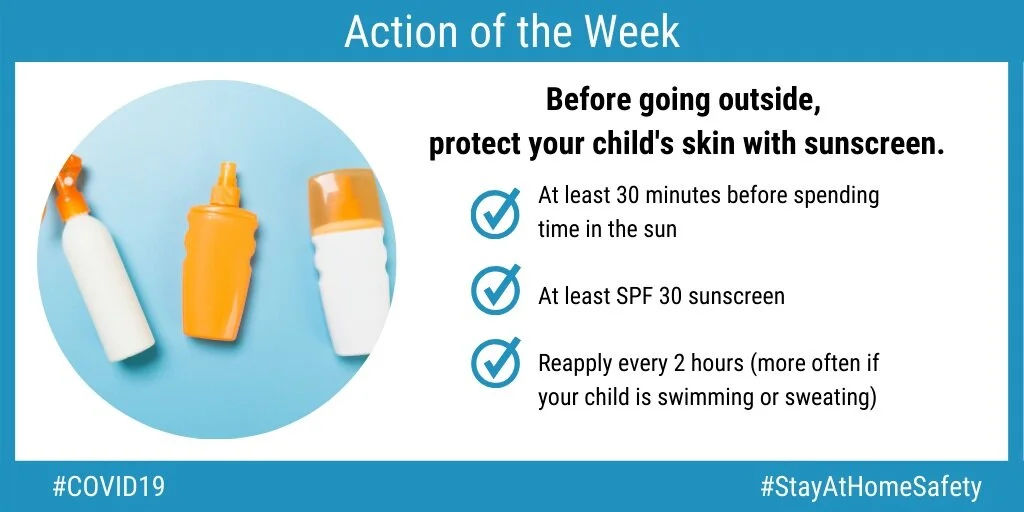
Every Monday, we are promoting a new action that each family can take to keep their children safer while social distancing. This week, we want every family to protect their children’s skin with sunscreen. When applying sunscreen, it’s important to put it on at least 30 minutes before spending time in the sun. Make sure it is at least SPF 30, and reapply every 2 hours (apply more often if your child is sweating or swimming). For more information about sun safety and sunscreen, check out this page from HealthyChildren.org.
Contest
Show us how you’ve been preventing child injury at home and you could win $500!
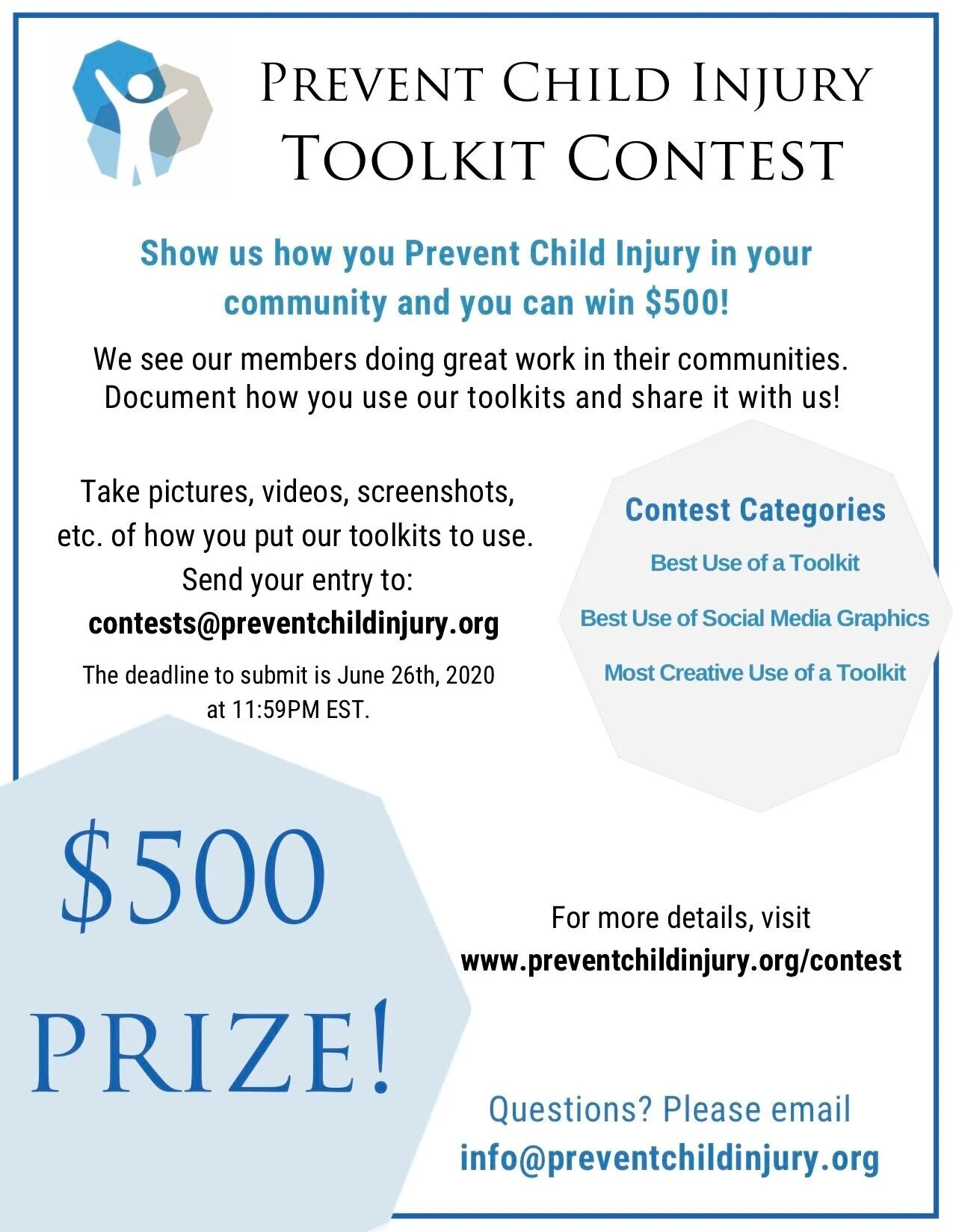
Document how you use our toolkits or participate in outreach weeks (our most recent outreach week was last week’s swimming pool safety!) with pictures, videos, or screenshots. Prizes will be awarded in the following categories:
Best Use of a Prevent Child Injury Toolkit
Best Use of Prevent Child Injury Social Media Graphics
Most Creative Use of a Prevent Child Injury Toolkit
You don't have to submit to a specific category -- we will evaluate it to see which category it fits into best.
We will accept multiple submissions from the same individual/organization if it is not a copy of a previous submission. Share the contest guidelines with your friends, family, and colleagues!
Our contest is open until June 29th, 2020. Read more about the contest here. Please send submissions to contests@preventchildinjury.org.
Coming Up
On Our Calendar
May 25 - 31: Poison Prevention at Home
June 1 - 7: National Safety Month
Events
Attend Columbia University’s ICRC Annual Injury and Violence Prevention Conference this Thursday, May 21st, from 10AM - 4PM EST. “The conference will provide the opportunity to converse with your injury prevention colleagues in academia, health departments, hospitals and other organizations to discuss cutting-edge research and best practices in injury and violence prevention.” Register (for free!) for the conference here.
The Children’s Safety Network (CSN) is hosting a webinar titled “Highlights from the Child Safety Learning Collaborative” on Thursday, May 21st from 3 - 4PM EST. The webinar “will highlight how states work together through the CSLC to achieve health results by building capacity to improve state injury and violence prevention systems.” Register for the webinar (for free!) here.
Thank You Notes

Thank you to all who reached out to us about registering for the 4th Annual National Summit for Health Communication! We were thrilled by how many of our members were interested in learning more about health communication. We hope to have more opportunities like this in the future, so stay tuned.
We also want to thank all of you for participating in our swimming pool safety outreach week! We appreciate all of the hard work that you do to keep your communities safer.
Archived

May 11th, 2020: Swimming Pool Safety & National Water Safety Month
May is National Water Safety Month! Drowning is the leading cause of death for children 1 - 4 years old, and the second leading cause of injury death for children 5 - 9 years old. While rates of drowning fatalities have been decreasing since 1985, drowning still claimed the lives of nearly 1,000 children in 2017.
It’s important to discuss water safety every year when the weather starts warming up and families begin going to beaches, lakes, and pools. Check out the American Academy of Pediatrics’ comprehensive Drowning Prevention Toolkit for infographics, videos, and social media posts on water safety for children of all ages.
Toolkit Outreach Week
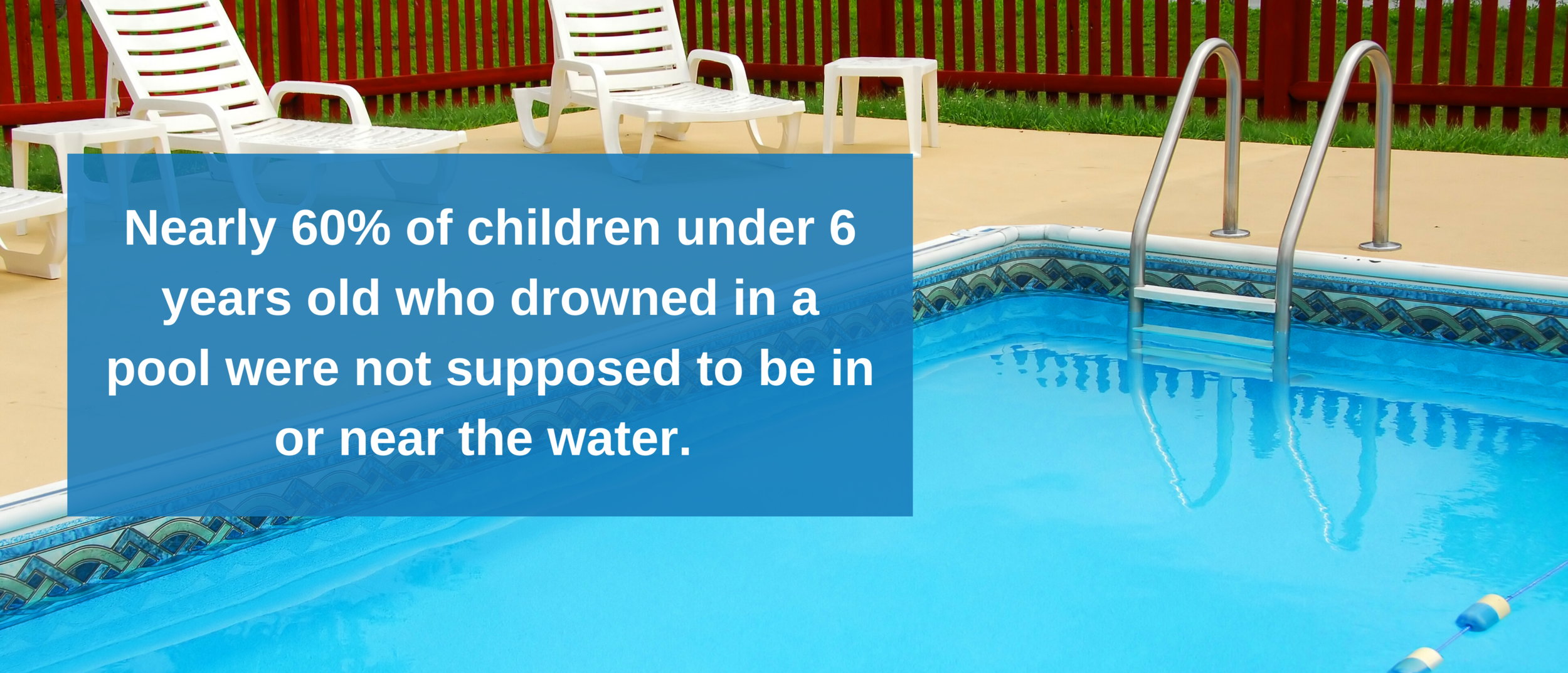
In recognition of National Water Safety Month, we are hosting an outreach week May 11th - 17th using our new toolkit on swimming pool safety. Nearly 60% of children under 6 years old that drown in swimming pools were not supposed to be in or near the pool when found. Because of this, we focused on a few of the “layers of protection” that are necessary in preventing children from accessing the swimming pool without an adult present. Our toolkit focuses on these key messages:
Use Physical Barriers: Make sure all swimming pools (including inflatable above-ground pools) are surrounded by a fence that is at least 4-feet high and has a self-closing, self-latching gate. The fence should not have openings (either underneath or between the slats) that are more than 4 inches. Empty smaller pools after every use.
Safety Barrier Guidelines for Residential Pools — Consumer Product Safety Commission
Install Alarms: Install alarms on all doors that lead outside. These alarms make a sound when the door is opened to warn adults that a child might have gone outside. Put pool alarms in the water itself. These alarms sound an alert when there are waves in the water, which could mean that someone has fallen into the pool.
Pool Safely Step 4: Alarms (Video) — Pool Safely
Why You Need to Invest in a Pool Alarm This Summer — Good Housekeeping
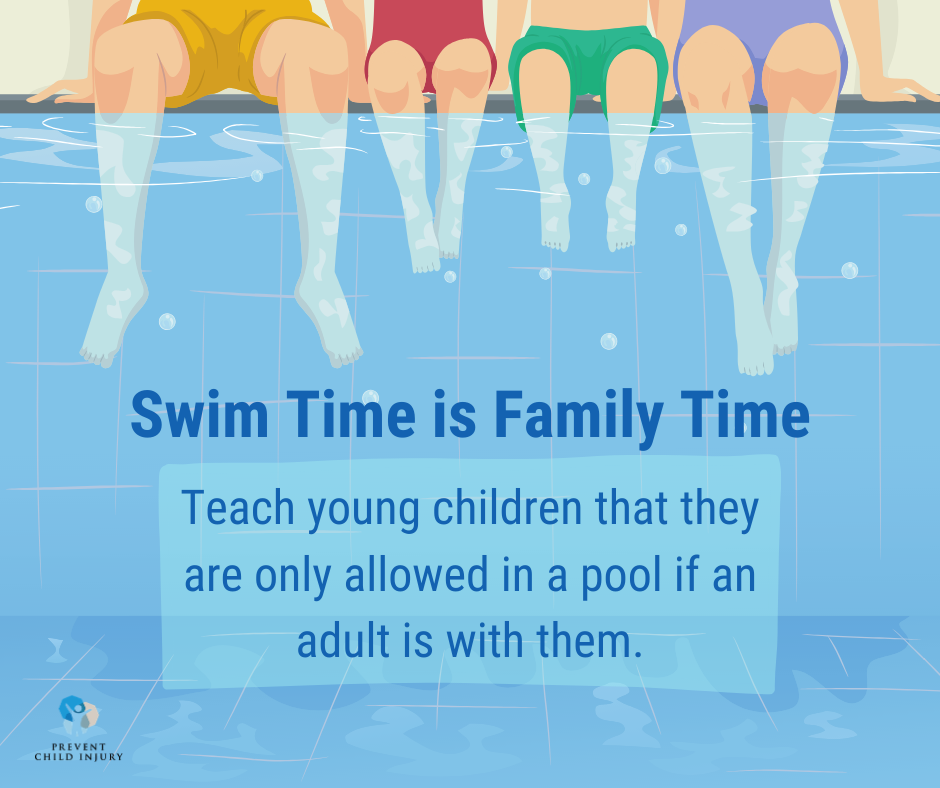
Swim Time is Family Time: Teach young children that being in or around the pool is only done with adults around – never by themselves. Put away all pool toys when swim time is over so that children are not tempted to go near the pool unsupervised.
Swimming Safety Tips — Safe Kids Worldwide
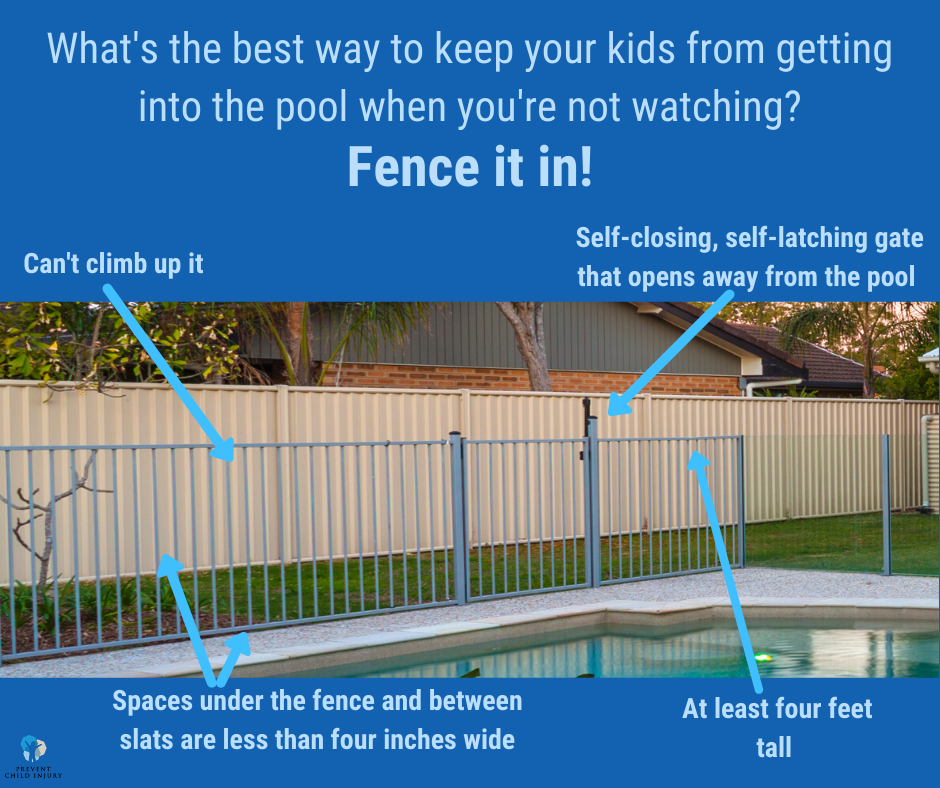
Please add swimming pool safety to your outreach plans for this week, and use our materials — including graphics, social media posts, newsletter, and press release — to raise awareness about swimming pool safety and drowning prevention.

COVID-19 Quick Tip
With some public pools delaying opening or closing for the summer, we have heard reports of families buying portable and above-ground pools for their backyards. These can be just as dangerous as permanent pools, so it’s important to keep these safety tips in mind when purchasing a portable pool:
Action of the Week
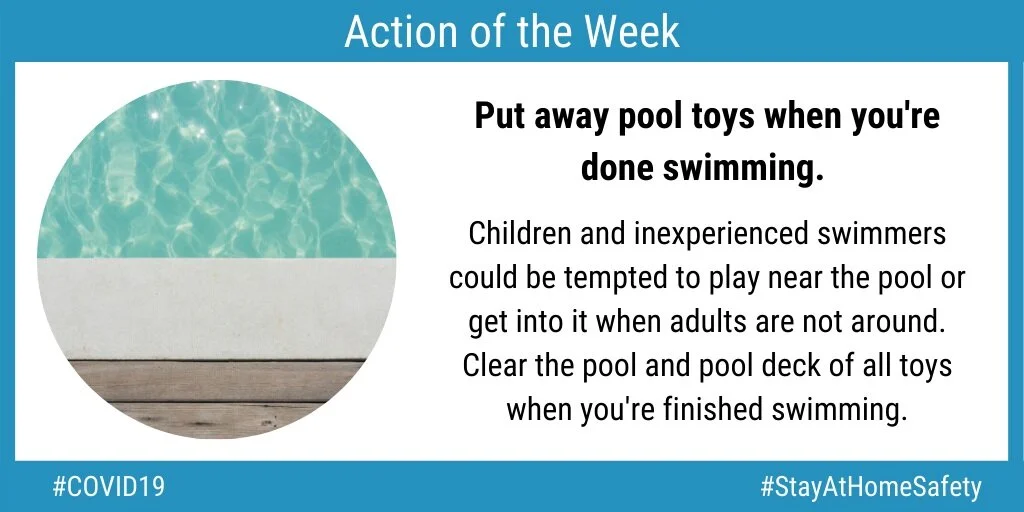
Every Monday, we are promoting a new action that each family can take to keep their children safer while social distancing. This week, we want every family to clean up and put away pool toys when everyone is finished swimming. Children could be tempted to play near the pool without an adult present if toys are left out. Children could also try to reach in to grab toys that are floating in the pool, risking falling into the water.
Coming Up
On Our Calendar May 18-24: UV Awareness Month, Don’t Fry Day (May 22nd) May 25-31: Home Poisons
Events
Attend Columbia University’s ICRC Annual Injury and Violence Prevention Conference next Thursday, May 21st, from 10AM - 4PM EST. “The conference will provide the opportunity to converse with your injury prevention colleagues in academia, health departments, hospitals and other organizations to discuss cutting-edge research and best practices in injury and violence prevention.” Register (for free!) for the conference here.
The Children’s Safety Network (CSN) is hosting a webinar titled “Highlights from the Child Safety Learning Collaborative” on Thursday, May 21st from 3 - 4PM EST. The webinar “will highlight how states work together through the CSLC to achieve health results by building capacity to improve state injury and violence prevention systems.” Register for the webinar (for free!) here.
Archived
May 4th, 2020: National Bike Safety Month & Bike to School Day
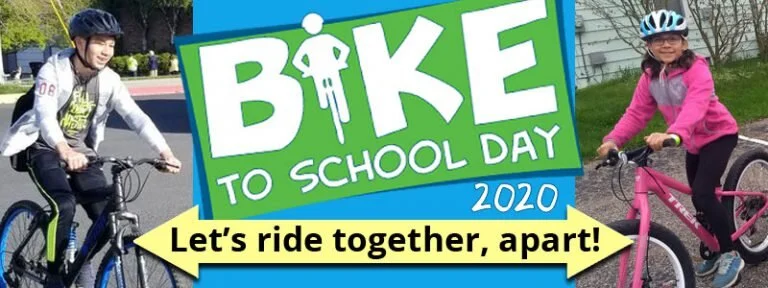
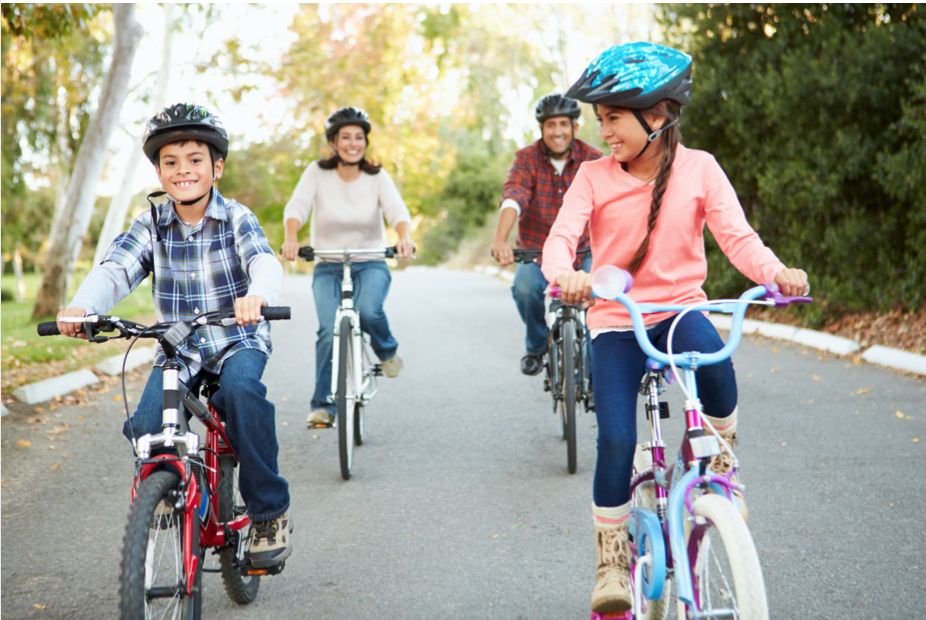
May is National Bike Safety Month, and this Wednesday, May 6th, is National Bike to School Day! Social distancing doesn’t mean you can’t spend time outside, and many healthcare professionals are recommending spending time in nature and getting active to improve mental health. Celebrate National Bike Safety Month by putting on your helmets, following all road safety laws, and taking the family for a ride in your favorite park or around the neighborhood.
Every year since 2012, Walk & Bike to School hosts Bike to School Day (May 6th), which encourages healthy habits, a cleaner environment, a close-knit community, and an opportunity to promote safety while bike riding. Because schools are closed due to COVID-19, Walk & Bike to School has planned an entire week devoted to focusing on safety, community, and fun. Participate in their events and connect on social media to share how your family is recognizing Bike to School Day from a distance. Learn more about what they have planned here: http://www.walkbiketoschool.org
Bike Safety Resources
Bicycle Safety - National Highway Traffic Safety Administration
Rules of the Road for Riding Safely - National Highway Traffic Safety Administration
Safety in Seconds: Bike Helmets (Video) - Safe Kids Worldwide
On Bike or Foot, Help Kids Prevent Injuries With These 3 Safety Tips - Safe Kids Worldwide
Bicycle Helmets - Nationwide Children’s Hospital
Action of the Week
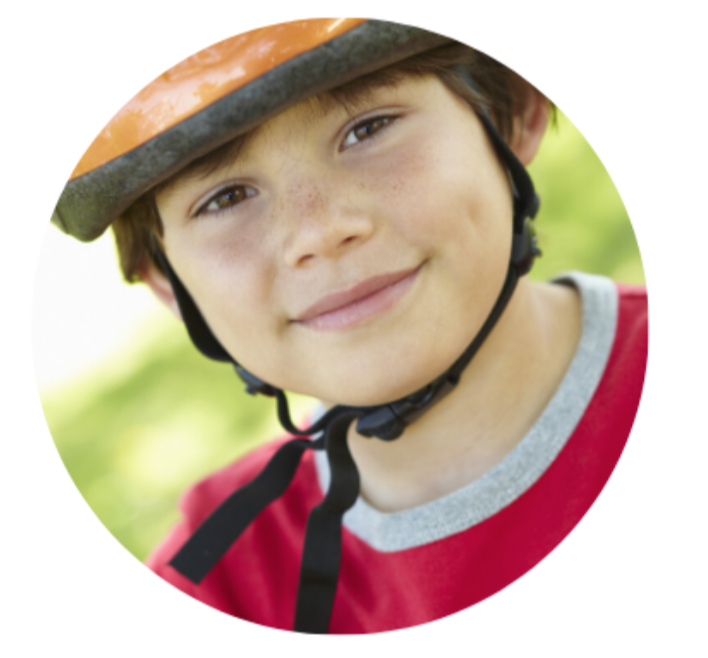
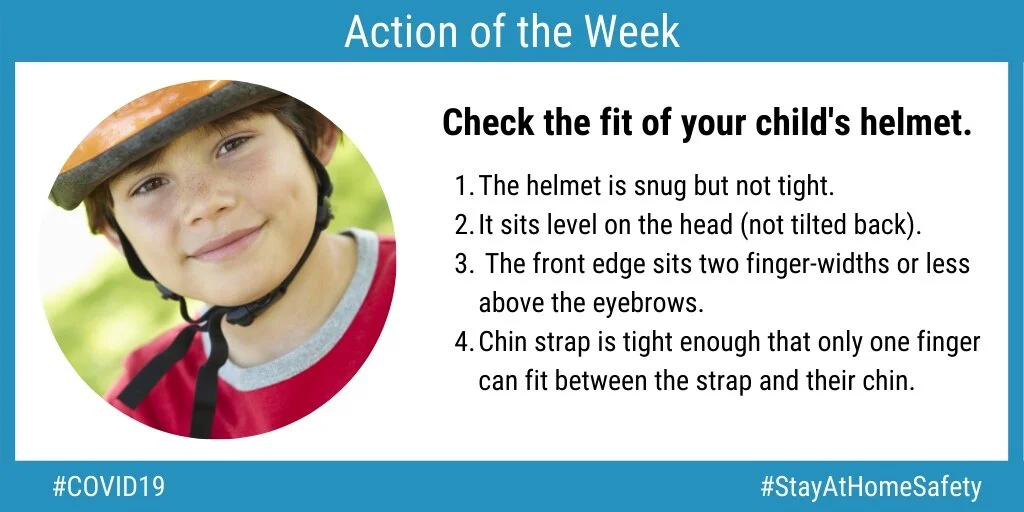
Every Monday, we are promoting a new, simple action that each family can take to keep their children safer while social distancing. This week, we want every family to check the fit of their child’s helmet. It’s important that your child’s helmet fits correctly in order to prevent dangerous head injuries. When fitting a child for a helmet, make sure to check the following steps:
The helmet is snug but not tight
It sits level on the head (not tilted back)
It sits low on the forehead (one or two fingers width from the eyebrows to the helmet)
The chin strap is snug, with no more than one finger able to fit between the chin and the strap
For more information on fitting a helmet, check out this resource from NHTSA, the National Highway Traffic Safety Association: https://www.nhtsa.gov/sites/nhtsa.dot.gov/files/8019_fitting-a-helmet.pdf
Coming Up
On Our Calendar May 11-17: Toolkit Outreach Week: Swimming Pool Safety May 18-24: UV Awareness Month, Don’t Fry Day (May 22nd)
Events
Kids In Danger is hosting a “Safe From the Start” webinar on May 7, 2020 (1 - 2 PM CT). Nancy Cowles, KID Executive Director, will be discussing children's product safety, including recalled products, furniture tip-overs, and choking and ingestion hazards. She will also be talking about creating a safe sleep environment for infants. A Q&A session will follow. RSVP for this event here. (Sign up early—seats are limited, and this event was created to accommodate overflow from the April 29 webinar).

Just in time for National Water Safety Month, our swimming pool safety toolkit promotes the "layers of protection" necessary to prevent children from accessing the pool without an adult present. The toolkit contains a customizable press release, newsletter/blog article, photo guidelines, social media posts, a Pinterest board, graphics, and links to additional resources which provide supplementary information. Our campaign is May 11th - 17th, 2020, so if you haven't done so already, please take some time to add swimming pool safety to your social media and outreach plans for that week. You can view the toolkit here: https://www.preventchildinjury.org/toolkits/swimmingpoolsafety
Archived
April 27th, 2020: Home Playground Safety
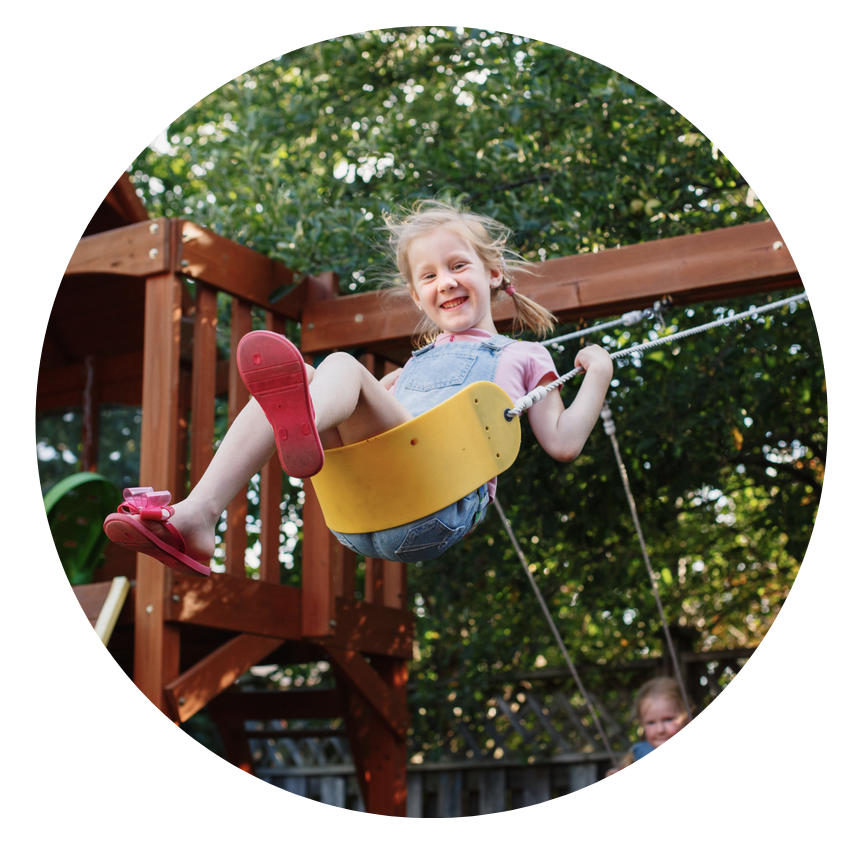
This week is National Playground Safety Week! Although many states have closed public playgrounds to stop the spread of COVID-19, some families have playground equipment in their own backyards. Unlike public playgrounds, though, these backyard fun zones aren’t inspected and maintained by professionals, so parents and caregivers should carefully check their equipment for safety before the kids start to play.
Resources on Playground Safety
Home Playground Safety Checklist – U.S. Consumer Product Safety Commission
Outdoor Home Playground Safety Handbook – U.S. Consumer Product Safety Commission
Playground Safety (English) – healthychildren.org
Playground Safety (Español) – healthychildren.org
Playground Safety – Injury-Free Coalition for Kids
Safety Tips for Home Playground Equipment (English) – healthychildren.org
Safety Tips for Home Playground Equipment (Español) – healthychildren.org

Playground Safety: Safe Surfaces toolkit – Prevent Child Injury
Action of the Week
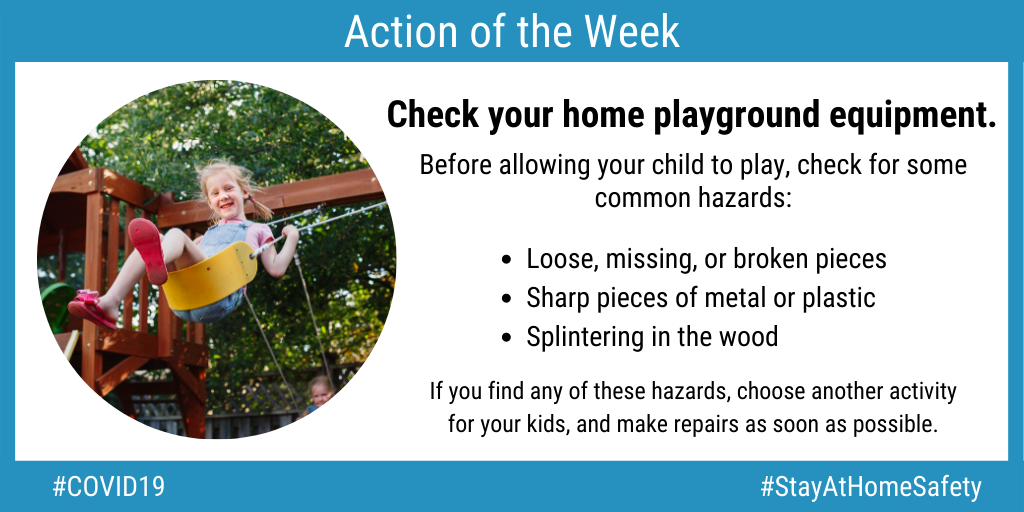
Every Monday, we are promoting a new action that families can take to keep their children safer while social distancing. Because it’s National Playground Safety Week, we’re encouraging families to check their backyard playground equipment. Before your kids run out to play, look over your equipment for some common hazards: loose, missing, or broken pieces; sharp pieces of metal or wood; and splintered wood.
COVID Quick Tip
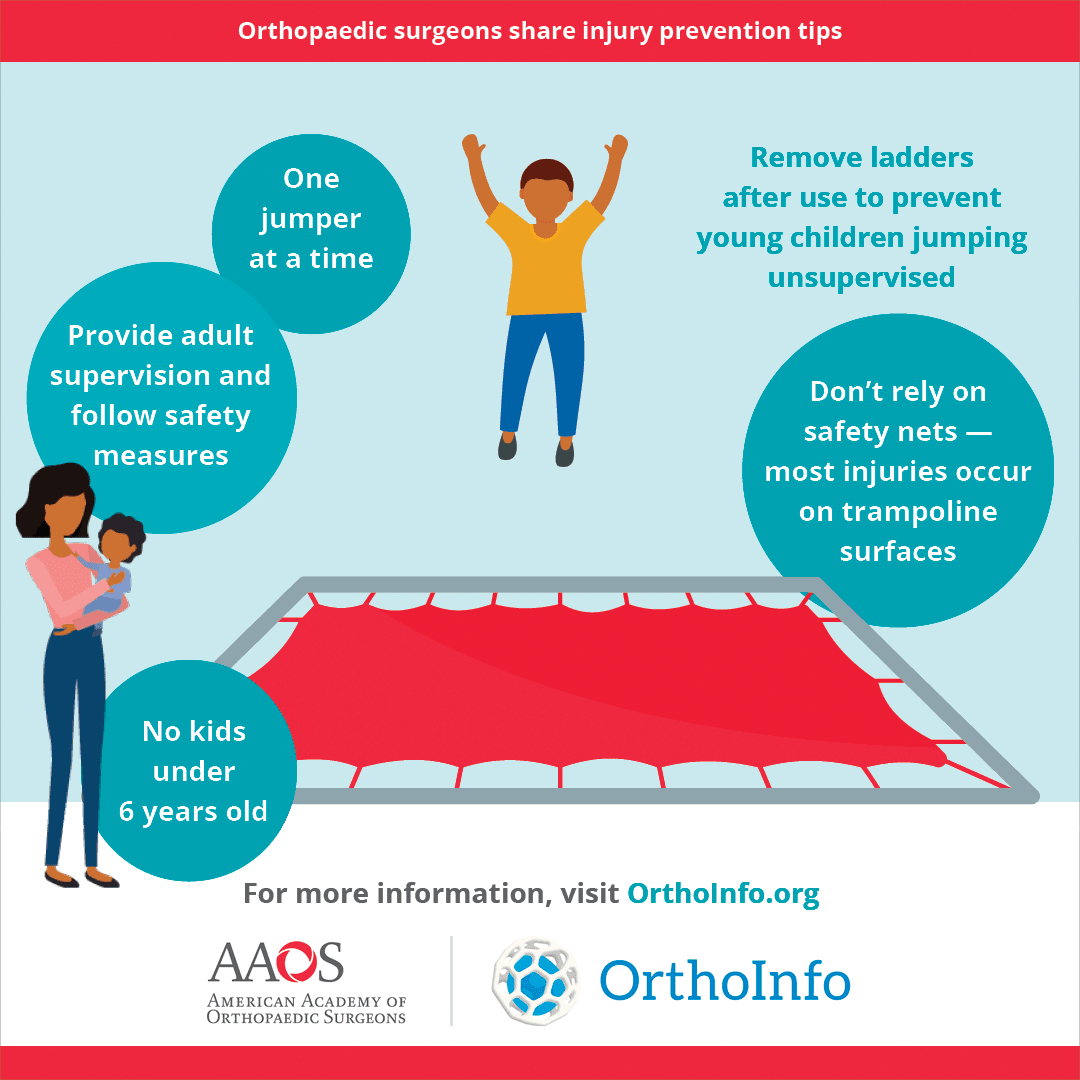
There have been reports of families buying more trampolines during stay-at-home orders, so emergency departments are expecting to see a rise in injuries relating to trampolines. Although the American Academy of Pediatrics recommends not buying trampolines, if you already have one, strongly enforce safety rules.
Trampolines: What You Need to Know (English) – healthychildren.org
Trampolines: What You Need to Know (Español) – healthychildren.org
“My daughter is begging for a backyard trampoline, but I’m concerned…” – Mayo Clinic
Coming Up
On Our Calendar
May 4-10: National Bike Safety Month
May 11-17: Toolkit outreach week: swimming pool safety
Events
Kids In Danger is hosting a “Safe From the Start” webinar on May 7, 2020. Nancy Cowles, KID Executive Director, will be discussing children's product safety, including recalled products, furniture tip-overs, and choking and ingestion hazards. She will also be talking about creating a safe sleep environment for infants. A Q&A session will follow. RSVP for this event here. (Sign up early—seats are limited, and this event was created to accommodate overflow from the April 29 webinar).

ArchiveD

April 20th, 2020: Youth Sports During COVID-19
This week, we will be talking about youth sports during COVID-19. School is out and sports seasons have been postponed — what does this mean for young athletes? Some will continue to train at home without the supervision of their coach. Injuries might occur from improper technique and overuse. Others have difficulty staying motivated and might be disappointed or angry that their sports seasons have been cut short. On the other hand, social distancing could provide a much-needed rest period for athletes that train all year long. We have compiled resources that address all of these topics to better support young athletes during this time.
Staying Injury-Free While Training at Home
inCourage: How to Keep Your Kids Safely Active…and Out of the Emergency Room
Safe Kids: Sports Safety Checklist for Parents, Sports Overuse Injury Tip Sheet, Dehydration Safety Tip Sheet
Health.com: We're All Doing At-Home Workouts Now—Here's How Not to Get Injured
Not specific to children and teens, but can be applied to any age
Encouraging Movement (Or Rest)
Addressing Disappointment
Lastly, the Aspen Institute’s Project Play initiative is hosting an interactive discussion titled “Coronavirus & Youth Sports: What Kids Need from Coaches Now” on Wednesday, April 22nd from 2 - 3PM EST. The webinar will feature young people and their coaches as well as resources from trusted professionals about physical health and social emotional well-being. Register for free here.
COVID-19 Quick Tip
Over the last few weeks, some emergency departments have been seeing an increase in ATV injuries. Please share these resources with your peers and your community to encourage safety on ATVs.

Action of the Week
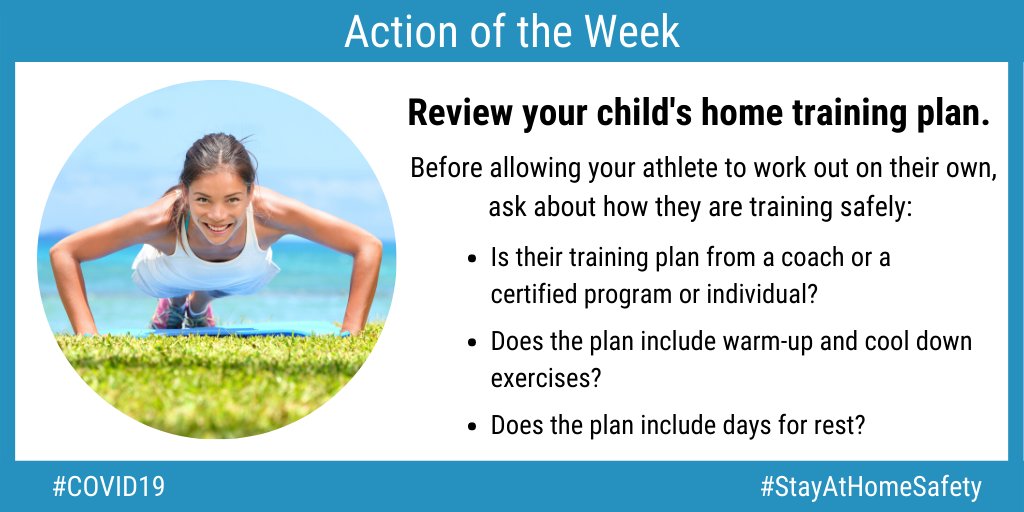
Every Monday, we are promoting a new, simple action that each family can take to keep their children safer while social distancing. This week, we want every family to review their child’s home training plan. If you have a young athlete in your home, it’s important to make sure that they are training safely. Ask your child a few questions to be sure that their plan was given to them by their coach or a certified program or individual, that it includes warm-up and cool down exercises, and that it includes days for rest.
Coming Up
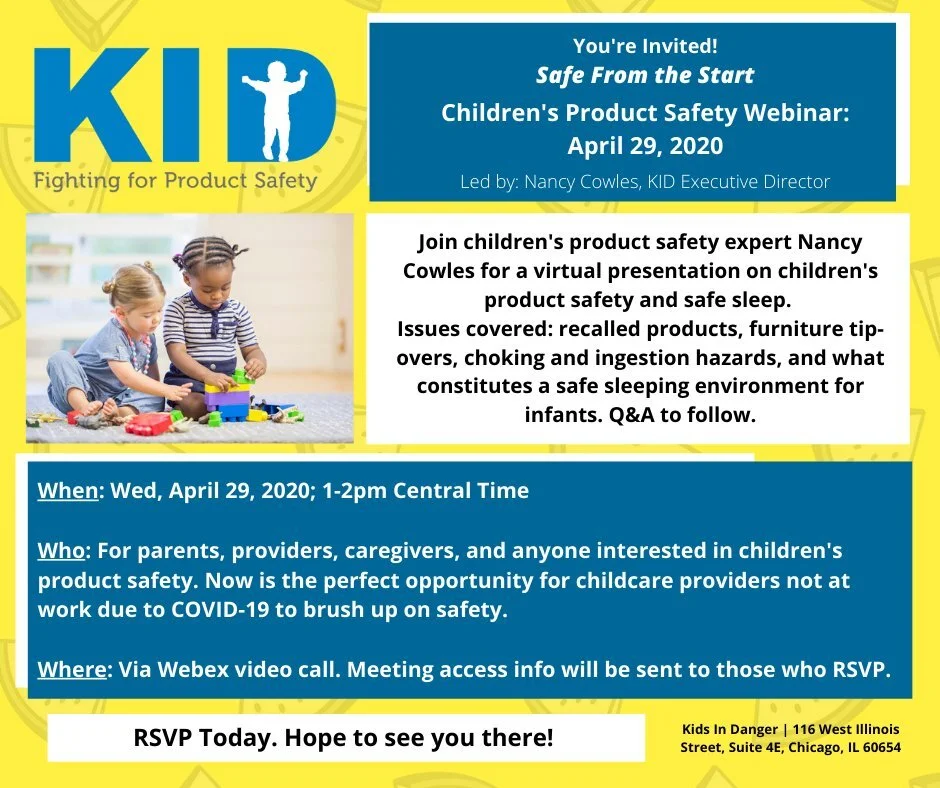
Kids In Danger is hosting a webinar next Wednesday, April 29th at 1PM Central Time. Nancy Cowles, KID Executive Director, will be discussing children's product safety, including recalled products, furniture tip-overs, and choking and ingestion hazards. She will also be talking about creating a safe sleep environment for infants. A Q&A session will follow. RSVP for this event here.
Next week’s newsletter will focus on National Playground Safety Week (April 27 - May 3), with a focus on backyard playgrounds, and the week after that we’ll be talking about National Bike Safety Month (May 4 - 10). If you or your organization has any materials or events about these topics that you would like us to promote to our members, please email info@preventchildinjury.org.
ARCHIVED
April 13th, 2020: Falls in the Home
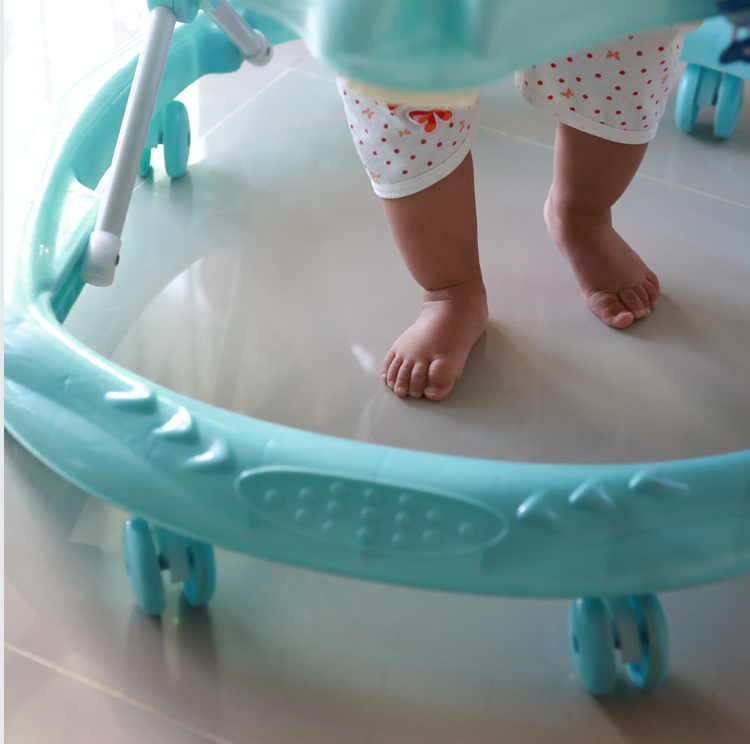
This week, we will be talking about falls that occur in the home. Falls are the leading cause of non-fatal injury for kids in the United States—nearly 8,000 kids are treated for a fall-related injury in the emergency room every day. Right now, while families are in their homes more than ever due to COVID-19, it’s important to address a few of the most common ways that children can fall so that parents can make their homes safer. Here are some links to resources to help get you started.
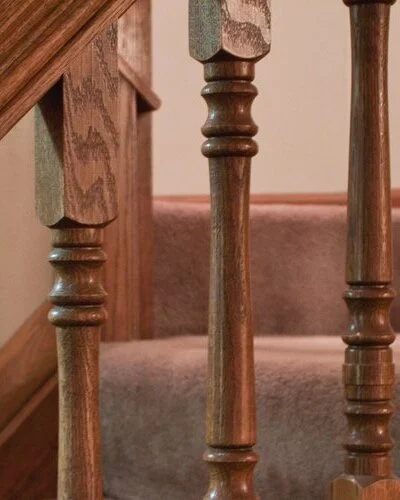


Furniture & TV Tip-overs
COVID-19 Quick Tip
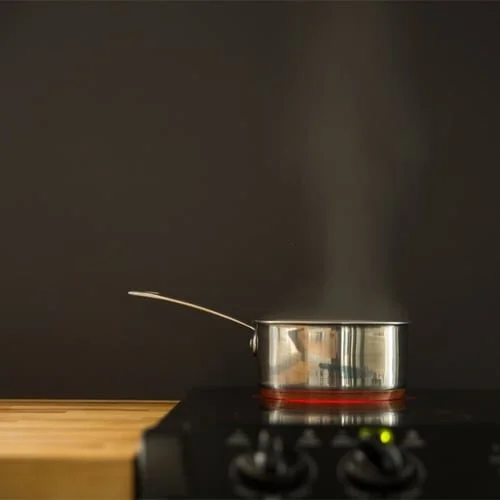
Over the last few weeks, some emergency departments have been seeing an increase in burn injuries primarily occurring in the kitchen. Please share these resources with your peers and your community to raise awareness on this emerging issue.
Action of the Week
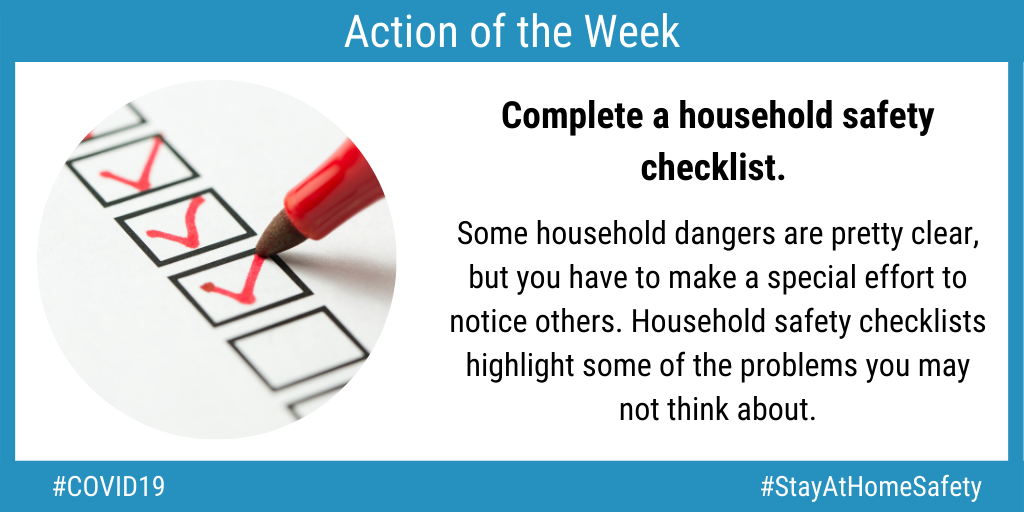
Every Monday, we are promoting a new action that families can take to keep their children safer while social distancing. This week, we are asking families to complete a household safety checklist. These checklists are helpful in identifying hazards in your home that you might not notice. KidsHealth has a checklist for nearly every room in the house and even has one for hazards outside of your home: https://kidshealth.org/en/parents/household-checklist.html
Coming Up
Next week’s newsletter will focus on National Youth Sports Safety Month (April 20 - 26), with an emphasis on backyard sports and training at home, and the week after that we’ll be talking about National Playground Safety Week (April 27 - May 1). If you or your organization has any materials or events about these topics that you would like us to promote to our members, please email info@preventchildinjury.org.
In Case You Missed It…
Last week was National Public Health Week, and there were several events that encouraged discussion from individuals and organizations across disciplines. On Monday, April 6th, the NPHW Forum: "NPHW @ 25: The Future of Public Health is Now" discussed public health’s strides in the last 25 years, the challenges of eliminating health disparities, and the imperative to create a more just world. A recording will be posted soon here: http://nphw.org/events/nphw-forum
Prevent Child Injury participated in a Twitter chat to “discuss all things public health, celebrate everything public health has accomplished and talk about where the movement is going” on Wednesday, April 8th. To see the conversation, find @NPHW on Twitter.
ARCHIVED
April 6th, 2020: Window Safety, National Public Health Week, and World Health Day (April 7th)
This week, we'll be talking about window safety, which includes window falls and injuries from window blind cords. Check out our toolkit and these resources from the National Safety Council to spread the word and share important safety tips about this hidden hazard.
Child injury is often overlooked during National Public Health Week and World Health Day, especially during a pandemic. With more children spending time in their homes due to school and daycare closures the risk of avoidable injury is high. So, this is an important topic to talk about, potentially now more than ever.
Prevent Child Injury and many other organizations have recognized this, and have created a collection of resources to share with your community.
Bookmark our page on COVID-19 that has links to great resources on this issue from many of our members with new information being added as it comes in.
Continue to use #StayAtHomeSafety when posting on social media.
Action of the Week
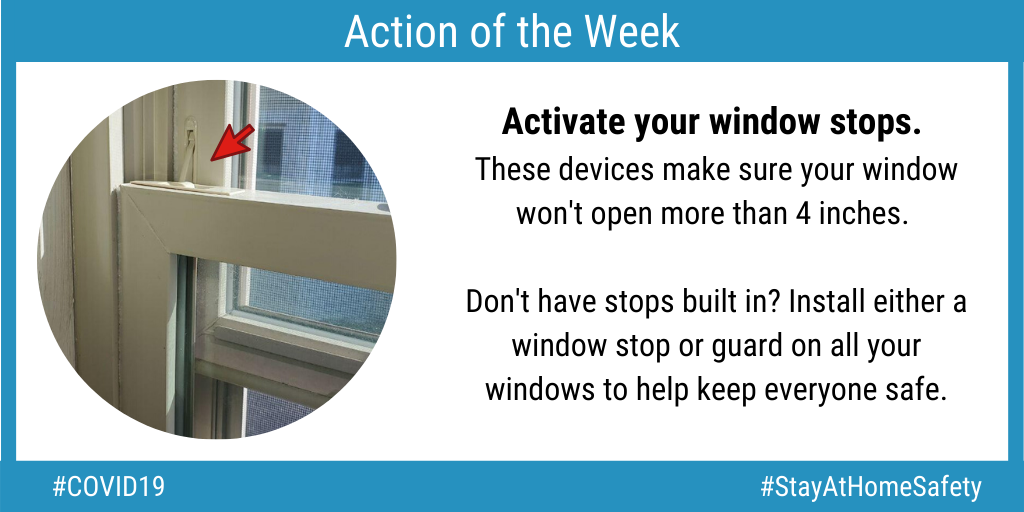
Every Monday, we are promoting a new, simple action that each family can take to keep their children safer while social distancing. This week, we want every family to think about how to keep the children in their home safer when they start opening the windows to let some fresh air in. Remember that window screens are meant to keep bugs out, not kids in. Activate your window stops or guards to make sure windows can’t open more than 4 inches. If you don't have stops built in and can’t get window stops or guards delivered this week, start by moving furniture away from windows to make it harder for kids to get to the window.
Coming Up
Safe States Alliance is hosting a Twitter chat titled “Injuries & Violence: The Unintended Impact of COVID-19 and the Essential Role of Prevention” on Wednesday, April 8th, at 9AM PT/ 12PM EST. Use the hashtag #IVPisEssential to follow along and participate.
Next week’s newsletter will focus on interior fall hazards (April 13 - 19), and the week after that we’ll be talking about National Youth Sports Safety Month (April 20 - 26), with an emphasis on backyard sports and training at home. If you or your organization has any materials or events about these topics that you would like us to promote to our members, please email info@preventchildinjury.org.
In Case You Missed It…
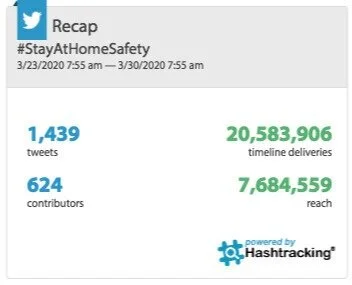
Last week, we hosted a Twitter chat about keeping kids safe at home while quarantining using #StayAtHomeSafety. We want to thank all of you who spread the word and participated. We were thrilled to have so many people and organizations participate, and we had over 20 million timeline deliveries. We put together a document that has the questions from the chat with a few of the answers that chat participants provided. You can access it here.
Also, PIPER at Colorado University hosted a Twitter chat on April 1st about child abuse and maltreatment during social distancing and quarantine. If you are interested in learning more about this topic, search #SaferQuarantine on Twitter. (P.S. You don't have to have a Twitter account to follow along with the conversation!)
ARCHIVED
Have information that you think would be helpful for our members? Send newsletter submissions (and feedback!) to info@preventchildinjury.org.